

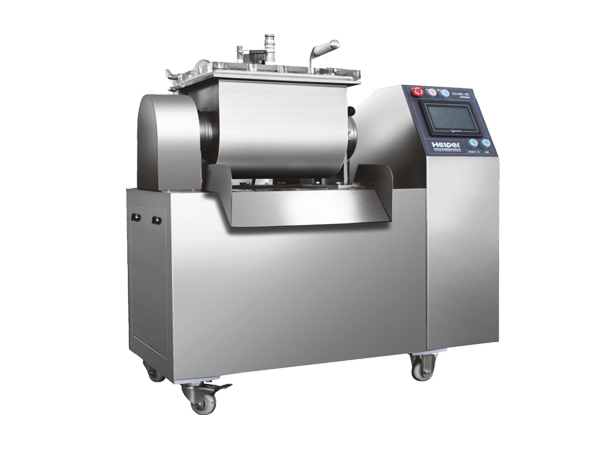
The core factors that affect the work rate of the dough processing machine (i.e., mixing efficiency and dough forming speed) include: machine performance, dough formula, operating parameters, and environmental conditions.
Machine factors: Motor power, design of the stirring paddle (hook), range of variable speed gears, and transmission efficiency directly determine the maximum working rate; insufficient power or worn paddle blades can significantly reduce stirring efficiency.
Dough Recipe: The protein content (gluten strength) of flour, water addition, and auxiliary ingredients (such as salt, sugar, oil, and improvers) affect the mixing resistance – high gluten, low water, and high sugar and oil content will slow down the rate of uniform dough formation.
Setting speed and gear: Low speed is suitable for preventing powder from flying in mixing but the speed is slow; high speed accelerates gluten development but is prone to temperature rise; the actual “working speed” often refers to the time required to achieve the desired dough state, rather than simply the speed, so the strategy of “slow initially and then faster” is often adopted to balance efficiency and quality.
Dough temperature: Water temperature and ambient temperature affect gluten hydration and enzyme activity – if it is too high (>30°C), it may need to slow down to avoid over-mixing due to excessive softening; if it is too low, hydration is delayed and mixing needs to be prolonged.
Load capacity: Exceeding the rated capacity can lead to excessive motor load, reduced speed, and even shutdown. The actual working rate decreases nonlinearly with the amount of material fed.
Maintenance status: Worn bearings, insufficient lubrication, or increased mechanical resistance due to fouling on the blades indirectly reduce the effective working rate.
It should be noted that in the context of industry or baking, “working speed” typically refers to the mixing time required to produce a qualified dough, rather than the no-load rotational speed; therefore, the speed is the shortest time that does not lead to overheating, overmixing, or uneven mixing, and often needs to be dynamically adjusted in conjunction with the “slow-to-fast” process.