

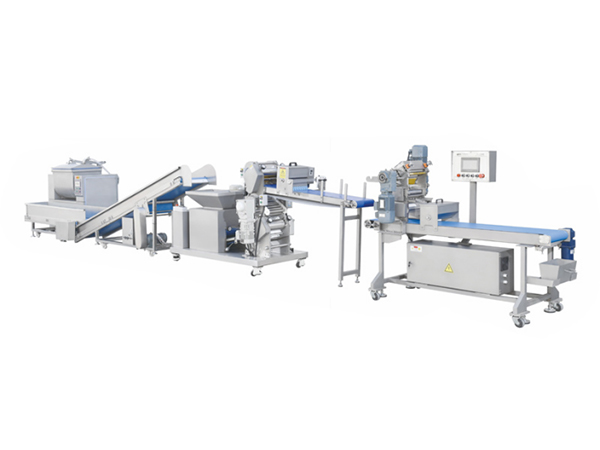
Noodle production line are being adopted by an increasing number of manufacturers thanks to the great convenience they deliver. Cleanliness and maintenance are critical if you intend to produce high-quality noodles. Flour and dough residues will remain inside the equipment after noodle processing. If left uncleaned immediately, the dough will dry and harden into caked debris, which will disrupt production during the next run. Below, a noodle production line manufacturer walks you through common equipment faults as well as key cleaning and maintenance practices.
Common Faults of Fully Automatic Noodle Production Line
1. Failure to form intact dough sheets
This issue arises from incorrect gap adjustment between the upper and lower roller sets, manifesting as cracked dough sheets or overly thick dough sheets.
If dough sheets crack: Narrow the gap of the lower roller set or widen the gap of the upper roller set.
If dough sheets are excessively thick: Widen the gap of the lower roller set or narrow the gap of the upper roller set to calibrate the roller clearance.
2. Uneven dough sheet thickness across the width
Caused by inconsistent clearances along the roller length; adjust the fastening screws on the rollers to rectify the problem.
3. Ragged edges on dough sheets
Rooted in uneven raw material feeding; ensure consistent, uninterrupted material feeding into the line.
4. Flour sticking to the surface of dough rollers
Resulting from poor contact between the scraper blade and rollers; adjust the cutting edge of the scraper blade.
5. Curved, bent dough sheets and noodles
Caused by excessively large mounting angles for rollers and scrapers, plus dull scraper edges. Reposition and sharpen the cutting edges to the correct angle.
Cleaning Procedures for Noodle Production Lines
After running the noodle machine, let residual dough dry for several hours before cleaning.
1. Run the machine in reverse rotation, then break up dried dough lumps with bamboo skewers to loosen hardened residues for easy removal.
2. Wipe internal flour deposits off mechanical components with a damp cloth.
3. Reverse the machine again and tap the equipment gently to dislodge any remaining dried dough, then wipe the interior once more with a damp cloth to clear all internal residues.
4. Cover the equipment with plastic sheeting and apply a thin layer of lubricant to prevent dust buildup that may interfere with subsequent production runs.
Key Maintenance Requirements
1. Operators must thoroughly read and strictly follow all instructions in the operation manual before use.
2. Forbid unauthorized reverse running of the machine during normal operation.
3. Inspect all components for abnormalities before startup; resolve any detected faults promptly to avoid safety accidents.
4. Prevent iron fragments or other hard foreign objects from mixing into flour to avert equipment damage and hazards.
5. Do not feed dough scraps from the rear side directly into the machine’s feeding hopper.
6. Never place hands or limbs between rollers, gears, chains, cutting blades and other moving parts while the equipment is operating.
7. Maintain proper lubrication of drive components: add engine oil every two shifts. Apply a small amount of edible oil to blade and roller surfaces after each production shift.
8. Engage and disengage the clutch of the dough mixing unit only when the machine is stationary.
9. Conduct a 10-minute no-load test run before rolling dough. Maintain an indoor temperature above 10–15°C in winter.
10. Thoroughly clean the machine after shutdown; no dough residues or loose flour shall remain inside any roller assemblies.
11. Keep all gears and bearings adequately lubricated at all times.
12. Prevent debris and hard foreign objects from falling into rollers and gear assemblies.
13. Replace bearing grease once every six months.