

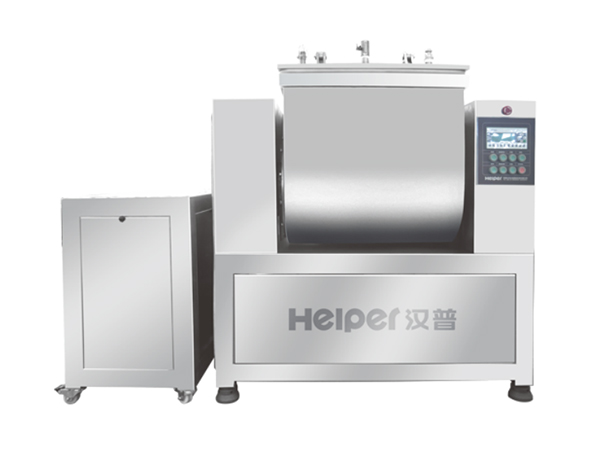
A dough sheeter is a kitchen and food processing machine designed to flatten dough into even sheets. Its core function is to apply mechanical pressure to adjust the dough to the desired thickness and texture. It is widely used in home cooking, catering services and food manufacturing plants. Below is a detailed introduction to its functions and applications:
I. Core Function: Flattening Dough into Uniform Sheets
1. Replacing manual rolling
Traditional hand rolling requires repeated folding and rolling, which is time-consuming, labor-intensive and hard to achieve consistent thickness. Equipped with rollers or pressing plates, a dough sheeter applies steady pressure to flatten dough into evenly thick sheets in a much shorter time, greatly boosting efficiency. For instance, when making fresh noodles, the machine can roll dough to a thickness of 1 to 3 millimeters, far more uniform than hand-rolled dough.
2. Adjustable thickness and texture
Most dough sheeters come with adjustable thickness controls such as knobs or dials. Users can switch between different settings to make various foods, including noodles, dumpling wrappers, wonton skins and pizza bases. Thin settings are ideal for translucent spring roll wrappers, while thicker settings work well for breads and flatbreads.
II. Application Scenarios: From Household Use to Industrial Production
1. Home cooking
Time-saving: A household dough sheeter can finish dough rolling within 10 minutes, perfect for busy daily life.
Better texture: The rolled dough sheets are smooth and uniform. They do not break easily after cooking and have a chewy texture. Fresh hand-pulled noodles made with a dough sheeter taste smooth and springy.
2. Catering industry
Standardized production: Medium-sized electric dough sheeters in restaurants enable mass production of dough sheets, ensuring consistent portion sizes and faster food serving.
Versatile for diverse menus: Operators can quickly adjust thickness settings to prepare different products such as wide noodles, thin noodles and wonton wrappers.
3. Food manufacturing plants
Mass production: Industrial automatic dough sheeters can operate continuously, processing hundreds of kilograms of dough per hour. They are widely adopted in the large-scale production of noodles, biscuits, frozen dumplings and other products.
Precise control: Integrated PLC systems regulate pressure, running speed and dough thickness strictly, keeping all products in line with quality standards.