

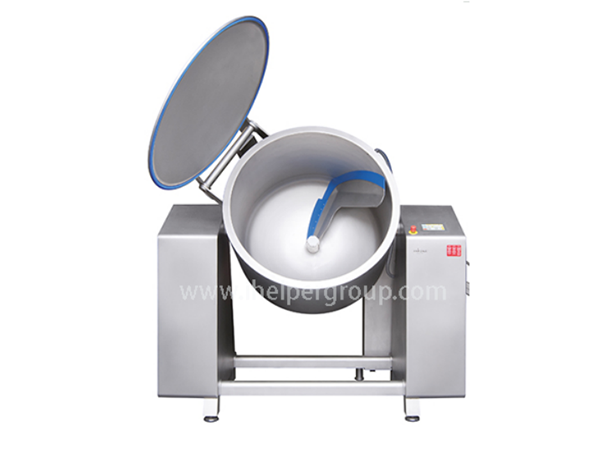
Dough processing machine are food processing equipment that replace manual labor with machinery for dough kneading. Compared with hand kneading, their core advantages are as follows:
1. Superior kneading uniformity and consistent finished product quality
Equipped with professional beaters and mechanical structures, the machine performs multi-directional kneading and pressing, effectively solving the problem of uneven force commonly seen in hand kneading.
Most models adopt three-dimensional S-shaped dough beaters, while high-end versions feature planetary dynamic stirring. They create a larger contact area during kneading, allowing gluten proteins to form a uniform three-dimensional network structure. The dough maintains a consistent state with stable fermentation results. Steamed buns and mantou turn out fluffier, while bread delivers a firm and chewy texture.
Smart models deliver reliable windowpane film formation via precise parameter control, meeting professional baking standards. Even novice users can achieve ideal results easily.
2. Higher kneading efficiency and substantial time savings
Dough processing machines greatly outperform manual kneading for all production scales.
Household models finish kneading and film formation in 10 to 15 minutes, and professional commercial units take as little as 7 minutes — cutting the time by more than half compared with hand work.
Industrial-grade machines can process up to 2 tons of flour per unit per day, boosting efficiency several times over to meet the demands of large-scale flour food production.
3. Labor savings and reduced work intensity
This is one of the most obvious advantages.
For household use, the machine runs automatically once the program is set. Users can attend to other preparations meanwhile, and avoid sore arms caused by prolonged hand kneading, which is ideal for baking enthusiasts and housewives.
In commercial and industrial settings, large dough processing machines are fitted with conveyor belts for automatic feeding and discharging. They eliminate manual dough handling, replace the work of multiple staff, greatly cut labor costs and remove potential safety hazards associated with manual operation.
4. Integrated functions for easier operation
Modern dough processing machines come with versatile built-in functions for enhanced convenience.
Most household models support intelligent constant-temperature fermentation, with the temperature adjustable between 25℃ and 38℃. It ensures stable dough fermentation even in winter, with no need for extra proofing equipment.
Multiple speed gears and dedicated modes for Chinese and Western pastries are available, catering to dough preparation for dumpling wrappers, noodles, toast, bread and more. The operation is intuitive and easy for beginners to master.
All dough-contact parts are mostly made of food-grade 304 stainless steel, which is rust-resistant, durable and easy to disassemble and clean, fully complying with food hygiene standards.