

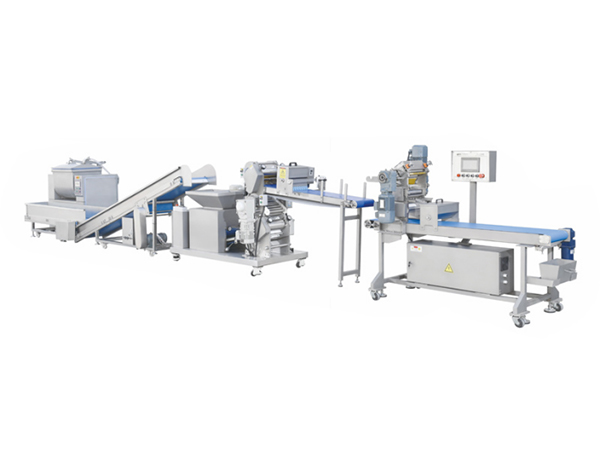
90% of noodle breakage faults of noodle making machines can be resolved through three measures: adjusting dough properties, standardizing operating procedures, and cleaning and maintaining components. Troubleshooting and repair can be carried out in the following order of priority:
1. Adjustment of dough formula and properties
Adjust the water-to-flour ratio: Too wet or too dry dough directly causes noodle breakage. For household noodle makers, the recommended flour-to-water ratio is 100:30–35. The kneaded dough should be loose, dryish granules rather than smooth soft dough. Noodles extruded from such dough feature the highest toughness and resist breakage.
Ensure sufficient kneading: The kneading time shall be no less than 10 minutes to form an adequate gluten network supporting structure with evenly distributed gluten strength inside the dough, preventing noodles from splitting during extrusion due to insufficient gluten.
Select proper flour type: High-gluten flour with protein content above 11% is preferred. Low-gluten flour lacks sufficient gluten, and the resulting noodles have inherently poor toughness, which easily causes mass breakage.
2. Standardization of rolling and operating procedures
Gradually reduce thickness without skipping gears: Do not roll thick dough to the target thickness in one pass. Start from the thickest setting and reduce thickness gear by gear. Fold and re-roll the dough 3–4 times after each rolling to compact the internal structure and prevent hidden layered cracks inside noodles.
Control single batch capacity: Divide large dough masses into fist-sized pieces for batch processing. Do not feed excessive dough at one time. Overloading the machine will lead to uneven extrusion force and mid-process noodle fracture.
Prevent machine overheating: Continuous operation time should not exceed 45 minutes. Overheating reduces motor power and destabilizes extrusion force, also resulting in noodle breakage. Stop the machine for 15 minutes to cool down before resuming operation.
3. Component cleaning and maintenance for hardware troubleshooting
Clean extrusion die orifices: When small holes of the extrusion die are blocked by hard dried dough residues, uneven stress during noodle extrusion will cause breakage. Use the matching cleaning pin to clear all die holes after each use, remove residual dough, and dry before storage.
Inspect cutters and rollers: Hard dried dough scale adhered to dough rollers and cutting blades will tear noodles during cutting. Remove the cutters and thoroughly clean with a dry brush. Never soak metal components directly in water, otherwise rust will worsen jamming and noodle breakage.
Verify proper component assembly: Improperly locked forming disc or front panel of electric noodle machines may trigger the safety switch and cause abnormal power output, leading to noodle breakage. Retighten the knobs of the front panel and confirm all components are securely fitted before startup.
If frequent noodle breakage persists after all the above checks, inspect the extrusion die for severe wear. Deformed die holes cause uneven noodle extrusion. Replacing with a new extrusion die of the same model can completely eliminate the fault.