

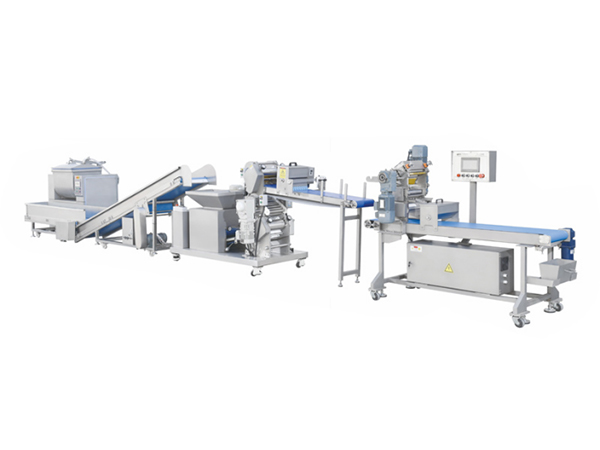
Noodle production line can be used to make various types of noodles, mainly applied in factories, canteens, hotels and noodle‑making plants. This fully‑automatic machine features simpler operation and higher working efficiency. However, it is vital to select a suitable noodle machine before use. So what are the key points for purchasing a noodle production line and how many noodle drying methods are there?
The following factors should be taken into account when buying a noodle production line:
1.Choose a professional noodle machine manufacturer. Check its business license, and learn about the types, quality and after‑sales service of the noodle machines produced by the manufacturer.
2.Select an appropriate noodle machine. A small‑sized noodle machine is sufficient for household use; a medium‑sized automatic noodle production line is suitable for hotels; while large‑sized machines are adopted for factory production.
3.Inspect components of the fully‑automatic fresh noodle production line. The quality of component materials affects the operation process and production quality. High‑quality materials that meet relevant quality standards are preferred. Apart from material quality, operating methods and maintenance also influence the service life of the machine.
4.Choose a proper machine model according to production requirements.
5.Negotiate issues such as price, delivery method and freight during purchase, and pay attention to safety during transportation.
There are mainly three drying methods:
High‑temperature rapid drying: A traditional process with a maximum drying temperature of about 50℃, a drying distance of 25 to 30 meters and a duration of around 2 to 2.5 hours. It has advantages of low investment and fast drying speed.
Low‑temperature slow drying: This noodle drying method was imported from Japan in the 1980s. Its maximum drying temperature does not exceed 35℃, with a drying distance of about 400 meters and a longer drying time of 7 to 8 hours. Characterized by simulating natural drying, this method ensures stable production and reliable product quality.
Medium‑temperature drying: This method features low investment, low energy consumption, high production efficiency and good product quality.